Table of Contents
How to Become an Arts Educator
Arts Educators spark imagination and give students the tools to express themselves through visual art, music, theater, and dance. They play an essential role in fostering creativity, cultural awareness, emotional development, and academic success, both in the classroom and beyond.
Whether you want to teach art, music, or performing arts in schools or community settings, becoming an Arts Educator begins with specialized training and a deep passion for student expression. A Master’s in Art Education, Music Education, or Curriculum and Instruction with an Arts Focus prepares educators to lead dynamic programs and advocate for the arts in every learning environment.
Arts Educator Job Description
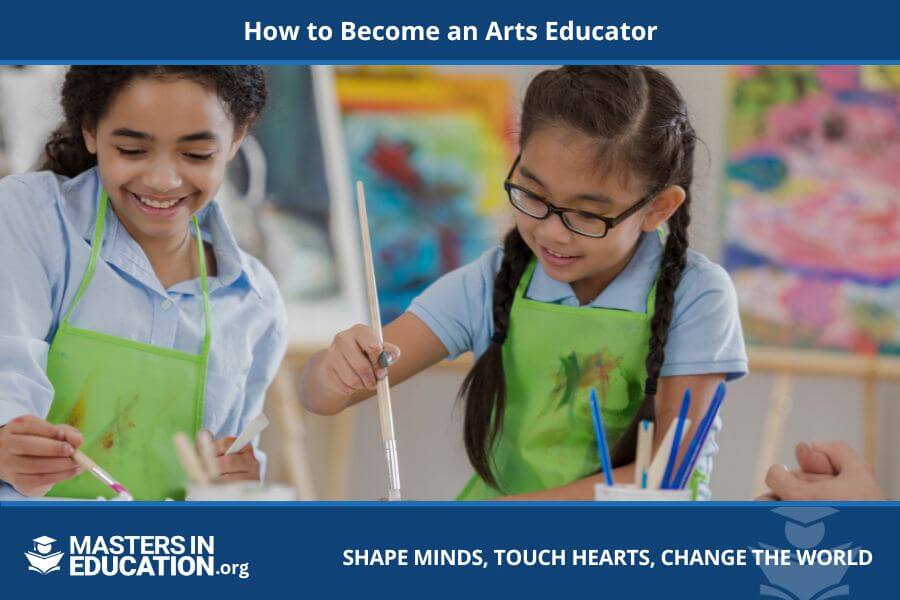
Arts Educators teach students how to create, perform, appreciate, and respond to different forms of artistic expression. They introduce artistic techniques, connect instruction to culture and history, and help students build skills such as discipline, communication, empathy, and collaboration.
Depending on the setting and subject area, Arts Educators may teach general art or music, lead theater productions, direct bands or choirs, or guide visual arts studios and exhibitions.
Common Tasks and Responsibilities:
| Core Tasks | Examples |
|---|---|
| Plan and deliver arts instruction | Teach music, art, theater, or dance in K–12 or community programs |
| Introduce technical skills and theory | Guide students in techniques, tools, and creative processes |
| Assess student progress and creativity | Use portfolios, performances, or rubrics to measure growth |
| Showcase student work and performances | Organize exhibitions, recitals, or plays |
| Integrate arts with broader curriculum | Collaborate with other educators to support cross-disciplinary learning |
Picasso emphasized nurturing creativity throughout life.
What Are the Educational Requirements to Become an Arts Educator?
Arts Educators usually begin with a bachelor’s degree in fine arts, music, theater, or dance—often combined with a teaching credential. For those looking to advance or specialize, a Master’s in Art Education, Music Education, or Curriculum and Instruction with an Arts Emphasis builds expertise in curriculum design, arts integration, and instructional leadership.
Graduate programs may include coursework in studio practice or pedagogy, assessment, arts advocacy, and child development, along with field experience in schools or arts programs.
Education Path:
| Level | Program | Notes |
|---|---|---|
| Bachelor’s Degree | Art, Music, Theater, or Dance Education | Required for initial licensure and foundational teaching preparation |
| Master’s Degree | M.Ed. in Arts Education or related specialty | Supports career growth, specialization, and leadership roles |
| Fieldwork | Student teaching or arts-based practicum | Supervised classroom or community arts instruction experience |
Internships and Exams:
- State-required student teaching under the guidance of a mentor teacher
- Arts-specific content exams required for licensure (varies by state)
Are Any Certifications, Licenses, or Credentials Needed?
Yes, Arts Educators must be licensed to teach in public schools. The requirements vary by state and subject area but typically involve passing a content-area exam and completing an accredited preparation program.
Special certifications in arts education, music instruction, or drama teaching can boost qualifications and increase hiring potential.
Common Credentials:
| Credential | Purpose |
|---|---|
| State Teaching License (Art/Music/Theater) | Required to teach arts subjects in public schools |
| Content Endorsement | Confirms subject-matter expertise in a specific arts discipline |
| National Board Certification (Arts Areas) | An optional credential recognizing advanced practice |
Licensing Process:
- Complete a teacher preparation program (bachelor’s or master’s level)
- Pass the required Praxis or state-specific content exams
- Apply for licensure through your state’s department of education
Where Do Arts Educators Work?
Arts Educators work in a variety of formal and informal education settings. Most are employed in elementary, middle, and high schools—either full-time or part-time—while others work in community organizations, afterschool programs, museums, or private studios.
Many educators also lead performances or exhibitions and engage in arts integration across subjects and grade levels.
Common Workplaces:
- Public and private K–12 schools
- Arts magnet and performing arts schools
- Community centers and after-school programs
- Arts museums, theaters, and galleries
- Online arts instruction platforms or virtual schools
Employer Examples:
| Employer Type | Examples |
|---|---|
| School Districts | Boston Public Schools, Minneapolis Public Schools |
| Arts Magnet Schools | Duke Ellington School of the Arts, Booker T. Washington High School for the Performing and Visual Arts |
| Cultural Institutions | The Metropolitan Museum of Art, New World Symphony, The Children’s Theatre Company |
| Nonprofits and Afterschool Programs | DreamYard, Boys & Girls Clubs, ArtReach |
See Related Articles Widget (This section will feature internal links to other education careers or specializations.)
What Skills and Traits Do Successful Arts Educators Have?
Arts Educators need a mix of creative talent, instructional skill, and empathy. They must inspire and guide students of all backgrounds while managing materials, performances, and classroom dynamics.
Strong Arts Educators also demonstrate cultural awareness, the ability to differentiate instruction, and a commitment to using the arts as a vehicle for expression, connection, and equity.
Key Skills and Traits:
- Artistic expertise in one or more disciplines
- Lesson planning and student-centered instruction
- Classroom management and engagement strategies
- Creativity, patience, and adaptability
- Ability to assess and document artistic growth
- Collaboration with educators and arts organizations
- Passion for student voice, expression, and representation
Arts Educator Salary Overview
Arts Educator salaries vary based on subject area, education level, location, and years of experience. Educators in high-performing arts schools or with advanced degrees may earn more, especially if they take on leadership or curriculum roles.
| Role Level | Median Salary |
|---|---|
| K–12 Arts Teacher | $61,000 – $70,000 |
| Performing Arts Educator (High School) | $65,000 – $80,000 |
| Museum or Community Arts Educator | $55,000 – $75,000 |
Job Outlook: While funding for arts education varies, demand for qualified Arts Educators remains strong in districts committed to whole-child development, SEL, and culturally relevant pedagogy. The increased integration of arts across curriculum areas also creates opportunities for interdisciplinary teaching roles.
Link to our Master’s in Education Salary Guide for more details.
Take the Next Step Toward Becoming an Arts Educator
If you believe in the transformative power of the arts, becoming an Arts Educator allows you to inspire, empower, and equip students to express their full selves. A Master’s in Arts Education, Music Education, or Curriculum and Instruction with an Arts Focus will prepare you to lead programs that foster creativity and connection.
Explore graduate programs that support your growth as a teacher, artist, and advocate for arts in education.
Sources
- National Art Education Association: Becoming an Art Educator
- National Association for Music Education: Teaching Music as a Career
- Edutopia: Why Arts Education Is Essential
- Americans for the Arts: Arts Education Resources
- National Board for Professional Teaching Standards: Certification Areas – Arts