What you’ll learn in this article…
- Rider's 36-credit M.Ed. in Curriculum and Instruction includes 12 elective credits.
- CAEP accreditation affirms Rider's education programs meet national quality standards.
- Tuition is $1,100 per credit for the 2025-2026 academic year.
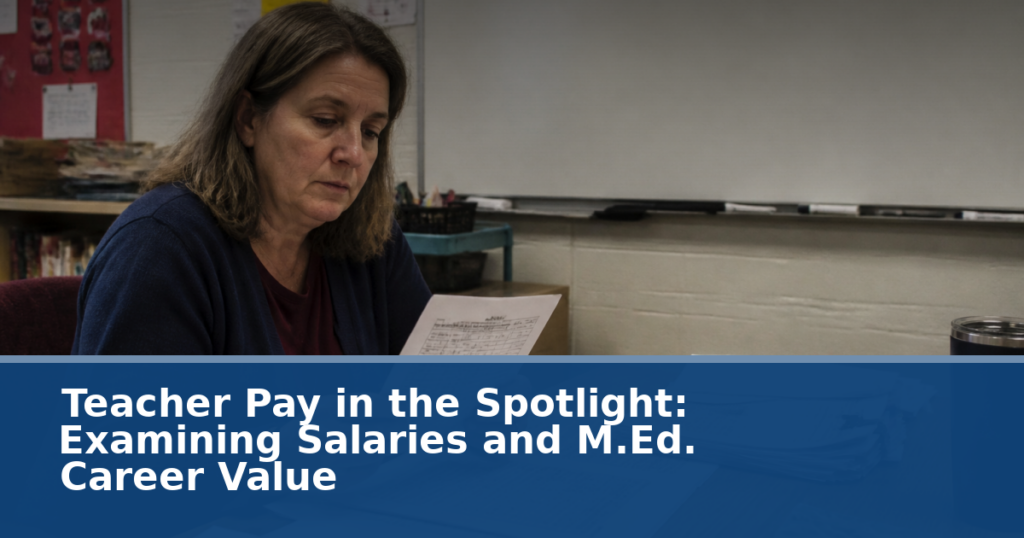
How does a master’s in education unlock higher pay and leadership roles in New Jersey schools? In many districts, earning an advanced degree adds $5,000 to $10,000 to a teacher’s annual salary. Rider University’s Master of Education programs, including a popular Curriculum and Instruction track, prepare educators for such advancement while balancing work and study. The curriculum blends theory with immediate classroom application, and flexible online and hybrid formats fit a teacher’s schedule. In a state where a master’s often pays for itself in just a few years, the decision is as much practical as professional.
Master's in Education Programs at Rider University
Teaching (MAT)
- 11 concentration options
- 30 total credit hours
- 3.0 GPA minimum
- 11 teacher certification tracks
- Includes strategies for diverse learners
- Prepares for New Jersey certification
- Courses in assessment and student learning
- Differentiating instruction for gifted
- Literacy for bilingual/bicultural children
- Research strategies and data analysis
- 11 concentration options
- 30 total credit hours
- 3.0 GPA minimum
- Initial teacher certification included
- Additional courses in inclusive practices
- Curriculum development and innovation
- Data-driven decision making
- Diverse learners curriculum focus
- 11 concentration options
- 30 total credit hours
- 3.0 GPA minimum
- P-3 Early Childhood certification track
- Post-Baccalaureate certification integration
- Courses in inclusive practices, assessment, literacy
- 9 additional required MAT credits
- Contact: Dr. Kathleen M. Pierce
- Department of Graduate Education, Leadership, and Counseling
What Graduate Education Programs Does Rider University Offer?
Rider University's College of Education and Human Services offers six distinct graduate programs1 grounded in a mission to prepare educators, counselors, and leaders who champion equity and excellence in schools and communities. Whether you aim to move into a specialized classroom role, step into administration, or lead curriculum design, the college pairs rigorous coursework with hands-on clinical practice.
Graduate Programs at a Glance
- Curriculum & Instruction (M.Ed.) , Develop expertise in instructional design, assessment, and teacher leadership. This program is a natural path for classroom educators ready to influence curriculum decisions at the school or district level.
- Athletic Leadership (M.A.) , Delivered fully online, this 30-credit program2 equips professionals for roles in coaching administration, athletic department management, and sports-based mentorship.
- Special Education (M.A.) , A fully online, 30-credit degree3 that deepens your ability to serve students with diverse learning needs. Coursework covers inclusive practices, behavioral strategies, and collaborative problem-solving.
- Educational Leadership (M.A.) , A 36-credit program4 designed for aspiring principals, supervisors, and district administrators. It emphasizes organizational theory, school law, and community engagement.
- Teaching (M.A.T.) , A 30-credit route5 for career changers and recent graduates seeking initial teacher certification. Concentrations align with New Jersey state requirements for elementary, secondary, and special subject teaching.
- Clinical Mental Health Counseling (M.A.) , A distinctive offering with a concentration in Dance/Movement Therapy2, blending psychological theory with creative arts modalities to prepare licensed professional counselors.
Flexible Online and Hybrid Delivery
Two programs, Athletic Leadership and Special Education, are available entirely online, making them accessible to working professionals throughout New Jersey and beyond. Other programs offer evening or hybrid schedules, allowing you to balance graduate study with full-time employment.
Curriculum & Instruction: A Standout for Teacher Leaders
Among these options, the M.Ed. in Curriculum & Instruction regularly draws educators who want to remain in the classroom while driving meaningful change. Graduates often move into roles such as lead teacher, instructional coach, or curriculum coordinator. The program emphasizes practical application, with many courses culminating in a capstone project that directly addresses a real-world issue in your own school setting.
Questions to Ask Yourself
Inside Rider’s Curriculum & Instruction Master’s Program
Rider University’s Master's in Curriculum and Instruction builds a rigorous foundation in how curriculum is designed, assessed, and adapted for diverse learners. The 36-credit program balances a structured core of 24 credits with 12 credits of flexible electives or a concentration, enabling educators to tailor the degree to their career goals.1 Most courses carry 3 credits, and the sequence is designed so that full-time teachers can progress steadily while working.
Core Coursework: Building Expertise
The M.Ed. core establishes competencies across the full curriculum development lifecycle. The program’s required courses include a focused set of classes that address planning, implementation, assessment, and inclusivity:1 - CURR 531 Strategies for Curriculum Development, Innovation and Change: This foundational course explores models for designing and leading curriculum initiatives. Educators examine how to introduce and sustain meaningful changes in K-12 schools, considering factors like stakeholder buy-in, standards alignment, and resource allocation. - CURR 532 Curriculum and Instruction: A companion to CURR 531, this course deepens the connection between curriculum theory and classroom practice. Students analyze instructional frameworks and learn to create learning experiences that are coherent with the intended curriculum. - CURR 538 Assessment of Curriculum and Instruction to Improve the Performance of Teachers and Diverse Learners: Here the focus shifts to data literacy and evaluation. Teachers learn to design formative and summative assessments that not only measure student learning but also inform instructional adjustments. The course places a strong emphasis on equity, training educators to identify and eliminate bias in assessment tools and processes. - CURR 548 Curriculum and Instruction for Diverse Learners: This course tackles differentiation and culturally responsive teaching. Students explore strategies for adapting curriculum materials and instructional methods to serve multilingual learners, students with disabilities, and those from varied cultural backgrounds.
Beyond these four identified courses, the 24-credit core includes additional required courses that complete the program’s backbone. While the specific titles for these additional courses were not listed in the available catalog excerpt, they typically encompass research methodology, technology in education, or advanced curriculum theory. The integration of these components ensures that graduates are not only skilled practitioners but also informed consumers of educational research.
Elective Concentrations and Personalization
The remaining 12 credits of the program allow for customization. Though the 2009-2010 catalog does not outline formal concentration tracks, the elective structure is inherently flexible.1 Educators often use this space to delve into content areas that match their professional contexts. Common pathways include literacy and reading specialization, STEM pedagogy, special education strategies, or instructional technology. Students work closely with a faculty advisor to select courses that align with their school settings and career ambitions, whether that means becoming a curriculum coordinator, instructional coach, or lead teacher.
Applied Learning and Culminating Experience
True to its practice-oriented design, the M.Ed. emphasizes application throughout. Assignments are often project-based, requiring educators to develop units, assessments, or professional development plans that can be implemented immediately. Regarding a final capstone, the older catalog does not detail a specific requirement.1 However, contemporary curriculum and instruction programs commonly offer options such as a master’s thesis, an action research project conducted in the candidate’s own classroom, or a comprehensive portfolio that synthesizes learning. Prospective students should consult the current program guide for the most up-to-date culminating expectations.1
Designed for the Working Professional
Rider recognizes that most M.Ed. candidates are full-time educators. The Curriculum and Instruction program is built for that reality. While detailed format information is covered in the delivery options section, the program’s design typically includes evening, weekend, or online coursework. The hybrid and online pathways mean that teachers across New Jersey and beyond can enroll without leaving their positions, immediately translating theory into practice within their schools.
How and Where You’ll Learn: Delivery Formats at Rider
Rider University’s graduate education programs are designed with working educators in mind. With online, hybrid, and on-campus options, plus evening, part-time, and accelerated schedules, you can advance your career without putting it on hold.

Admissions Requirements: What You Need to Apply
Applying to Rider's graduate education programs requires careful preparation. Here's what you'll need to gather.
- Bachelor's DegreeA bachelor's degree from an accredited institution is required. You must submit official transcripts from all prior colleges.
- Minimum GPAA cumulative undergraduate GPA of 3.0 is typically expected for master's programs. Applicants with lower GPAs may be considered conditionally.
- Standardized TestsThe GRE or MAT is not required for most graduate education programs at Rider. A test-optional policy applies to many applicants. However, the Program in Teaching requires the Praxis Core.
- Letters of RecommendationTwo letters of recommendation are required. They should come from academic or professional references who can speak to your potential for graduate study.
- Personal StatementA personal statement or essay is required. The prompt typically asks you to describe your career goals and reasons for pursuing a master's in education.
- Résumé or CVA current résumé or curriculum vitae is usually required. Programs that value teaching experience may ask for relevant background.
- Application DeadlinesRider accepts applications for fall, spring, and summer entry. Specific deadlines vary by program, for example, the Program in Teaching has an August 1 deadline for fall. Check your program's page for exact dates.
- Application FeeA nonrefundable $50 application fee is required. Applications are submitted online through Rider's graduate admissions portal.
Tuition and Financial Aid: Your Graduate Education Investment
How much will a Master's in Education from Rider University cost you? Let's break down the numbers so you can plan with clarity.
Tuition at a Glance: Per-Credit Rate
For the 2025-2026 academic year, Rider's graduate education programs, including the Curriculum & Instruction M.Ed., carry a flat per-credit tuition rate of $1,050.1 Because Rider is a private institution, this rate applies equally to New Jersey residents and out-of-state students. This simplicity eliminates the complexity of dual tuition schedules and keeps your cost projections straightforward.
Estimating Your Total Program Cost
The Curriculum & Instruction M.Ed. can be completed in either 30 or 36 credits, depending on your chosen specialization or additional endorsement pathways. At $1,050 per credit, the total tuition is estimated as follows:1
- 30-credit track: $31,500 total
- 36-credit track: $37,800 total
These figures cover tuition only and do not include university fees, books, or materials. While Rider's flat rate structure means no sticker shock for out-of-state learners, the total cost still represents a significant investment. Fortunately, over 90% of Rider graduate students receive some form of financial assistance.
Financial Aid: Options to Reduce Your Out-of-Pocket Cost
Rider encourages all graduate applicants to file the FAFSA to unlock federal aid. You may qualify for:
- Federal Direct Unsubsidized Loans: Graduate students can borrow up to $20,500 per academic year at fixed interest rates.
- Graduate PLUS Loans: Credit-based loans that can cover any remaining cost of attendance after other aid.
- TEACH Grants: Up to $4,000 per year for students who intend to teach in high-need fields at low-income schools. Note the service obligation; failing to meet it converts the grant to a loan.
- Graduate Assistantships: A limited number of positions offer tuition remission and a stipend in exchange for research or administrative work. Early application is essential.
- Rider Scholarships: The university awards merit-based scholarships to select graduate students, though amounts vary by program and funding cycle.
Special Discounts for Educators
If you're already working in a school, check for employer tuition reimbursement. Rider also partners with some New Jersey school districts to offer reduced rates for cohorts of teachers. Contact the Office of Graduate Admission to see if your district participates.
Planning Beyond Tuition
Remember to budget for technology fees, course materials, and any required on-campus residencies. The figures above give you a reliable baseline, but a personalized estimate from Rider's financial aid office will account for all variables, including any transfer credits you may bring.
By combining a clear per-credit rate, no residency surcharge, and multiple aid channels, Rider helps make your graduate investment manageable. Start with the costs, then explore funding to see your total out-of-pocket cost.
Only about half of all teacher preparation programs across the country hold national accreditation, according to a 2022 report. Yet within the CAEP system, over 90% of providers meet these rigorous standards. Rider University's CAEP accreditation signals a commitment to quality that sets it apart.
Accreditation and Program Quality at Rider
Accreditation is a rigorous peer-review process that verifies an education program meets national standards for quality and effectiveness. Rider University’s graduate education programs hold accreditation from the Council for the Accreditation of Educator Preparation (CAEP), the leading agency for national accreditation for educator preparation. The university also maintains full approval from the New Jersey Department of Education, ensuring its programs align with the New Jersey Professional Standards for Teachers and School Leaders. Rider’s commitment to quality is longstanding: its education programs have been continuously accredited since 1974, first under the National Council for Accreditation of Teacher Education (NCATE) and now under CAEP, as detailed in the university's accreditation information.
What CAEP Accreditation Means for You
CAEP accreditation is a mark of excellence that signals a program has passed a demanding review of its curriculum, faculty, clinical partnerships, and candidate outcomes. For prospective graduate students, it provides assurance that the degree will be recognized and respected. Key benefits include:
- Rigorous curriculum: A CAEP-accredited program must demonstrate that its coursework and field experiences are grounded in research and effective practice.
- Continuous improvement: Programs collect and analyze data on candidate performance and employer satisfaction, using those insights to refine instruction.
- Accountability: CAEP accreditation requires transparent reporting on measures such as graduation rates, licensure pass rates, and employment outcomes.
Licensure Portability and State Approval
In addition to national accreditation, Rider’s state approval from the New Jersey Department of Education is critical for initial teacher and administrator certification. This approval confirms that the program meets specific state requirements and prepares you for the New Jersey licensure exams. For those considering relocation, CAEP accreditation also strengthens licensure portability. Many states have reciprocity agreements that simplify the process of transferring a license earned through a nationally accredited program, as CAEP’s standards are widely recognized as equivalent to, or exceeding, state-level expectations.
Regional Accreditation for the University
Beyond program-level accreditation, Rider University as a whole is regionally accredited by the Middle States Commission on Higher Education. This institutional accreditation is essential for federal financial aid eligibility and the transfer of graduate credits. Together, these layers of accreditation, national, state, and regional, provide a comprehensive quality framework that protects your investment in a graduate education degree.
Related Articles
Faculty Spotlight: Experts Shaping Curriculum & Instruction
Rider University's Curriculum & Instruction faculty combine deep scholarly expertise with hands-on classroom experience, ensuring you learn from practitioners who understand today's educational challenges. Although detailed research profiles are not widely available online, the faculty's real-world impact stands out through the program's strong reputation among New Jersey educators.
Faculty Dedicated to Your Growth
Graduate courses in curriculum and instruction at Rider are led by accomplished educators from the Department of Teacher Education. Faculty such as Dr. Susan Dougherty, Dr. Tracey Garrett, and Dr. Heather Casey bring years of teaching and research in areas like literacy, pedagogy, and classroom management.1 Their commitment to teacher development means you will engage with current best practices and emerging trends. Small class sizes, often fewer than 20 students, allow these professors to mentor you closely, providing personalized feedback on your work and career guidance. You won't be just a number; professors get to know your strengths and professional goals.
Connecting Theory to Local Classrooms
Rider faculty maintain strong ties with area school districts through ongoing partnerships and grant projects. These collaborations give you access to real-world curriculum design initiatives and the chance to see instructional theory put into practice. Faculty involvement in local schools also means your coursework is grounded in the actual challenges and opportunities facing New Jersey educators today. This blend of academic rigor and practical application prepares you to pursue curriculum developer roles and other leadership positions with confidence.
The Rider M.Ed. program transformed my approach to teaching. I gained practical strategies for curriculum design that I could immediately apply in my classroom, and I've become a more confident leader among my peers.
Career Outcomes: Where a Rider M.ed. Can Take You
Earning a Rider University Master of Education opens doors to advanced career opportunities across New Jersey’s K-12 schools, higher education institutions, and educational organizations. A graduate degree signals expertise in curriculum design, instructional leadership, and student assessment, all highly valued in today’s competitive education job market. While exact placement rates depend on specialization and individual effort, a Rider M.Ed. provides the credentials and connections to move into roles with greater responsibility and compensation.
Education Career Paths in New Jersey
With a Rider M.Ed., you can pursue careers for master's in education such as instructional coordinator, curriculum specialist, lead teacher, department chair, or assistant principal. Each of these roles requires a deep understanding of curriculum development and a master’s-level preparation that Rider’s programs deliver. Because New Jersey maintains specific certification requirements for many school leadership positions, you should consult the New Jersey Department of Education’s website for current endorsement options and district-specific expectations. For example, many districts require a supervisor certificate for curriculum roles, which a Rider program can help you meet.
Salary Expectations and Job Outlook
Nationally, master’s degree holders in education often see a salary premium over those with a bachelor’s alone. The U.S. Bureau of Labor Statistics (BLS.gov) provides general trends: instructional coordinators, for instance, typically earn above the median for all education occupations, and job growth for these specialists is projected to be steady as schools focus on student outcomes and teacher development. In New Jersey, a state with strong investment in public education, salaries for master's in education jobs tend to be competitive. Many local districts publish salary guides that show step increases tied to advanced degrees, making the financial return on a Rider M.Ed. clear over a career. For the most up-to-date, location-specific data, explore BLS Occupational Outlook pages and the New Jersey Department of Education’s district salary schedules.
Leveraging Professional Networks and Resources
To ground your career plans in real outcomes, connect directly with Rider alumni. Use LinkedIn to find recent M.Ed. graduates and ask about their transitions into leadership roles. Rider’s alumni directory can also help you arrange informational interviews. Professional associations like the New Jersey Education Association (NJEA) and the American Educational Research Association (AERA) offer additional resources: NJEA publishes salary surveys and bargaining contracts, while AERA provides access to job market research and career development tools. These organizations can help you benchmark salaries and understand regional demand.
Planning Your Career Advancement
Combine your degree with targeted networking and continuous professional learning. Rider’s career services team can assist with resume reviews, interview preparation, and connections to school district recruiters. As you progress, stay informed about state policy changes and emerging instructional trends by following NJEA updates and AERA publications. A Rider M.Ed. is more than a credential, it is a catalyst for a more impactful, higher-earning career in education.
How to Apply: Taking the Next Step
Starting your graduate application at Rider University is straightforward, but a little preparation goes a long way. Follow these steps to submit a complete application on time.
Step 1: Attend an Information Session
Before you begin, join an online or on-campus information session. These events provide an overview of the Master's in Education programs, connect you with faculty, and give you a chance to ask questions about curriculum, format, and career outcomes. Check the Graduate Admission events page for upcoming dates.
Step 2: Prepare Your Application Materials
Gather these items early to avoid last-minute stress:
- Official transcripts: Request official transcripts from every post-secondary institution you have attended. Electronic submission is preferred.
- Résumé or CV: Highlight your teaching experience, leadership roles, and any relevant certifications.
- Personal statement: Write a focused essay explaining your professional goals and how a Rider M.Ed. will help you achieve them. Typically, this is 2-3 pages.
- Letters of recommendation: Two letters are required, preferably from academic or professional references who can speak to your potential as a graduate student and educator.
- Additional requirements: Some specializations may ask for a teaching certificate or a sample of academic writing. Check your program's webpage for specifics.
Step 3: Complete the Online Application
Rider uses a self-managed online application portal. Create an account, choose your program (for example, M.Ed. in Curriculum and Instruction), and fill out all sections. You can save your progress and return later. Pay the nonrefundable application fee, unless you qualify for a waiver (contact Graduate Admission for details).
Step 4: Submit Official Transcripts
After you submit the online form, have your official transcripts sent directly to Rider University's Graduate Admission Office. They accept transcripts via secure electronic services like Parchment or National Student Clearinghouse, or by mail to: Graduate Admission, Rider University, 2083 Lawrenceville Road, Lawrenceville, NJ 08648.
Step 5: Check Deadlines and Follow Up
Timing matters. Rider reviews applications on a rolling basis, but priority deadlines improve your chances of admission and financial aid. For fall enrollment, submit by March 1; for spring, submit by November 1. International applicants should allow extra time for visa processing and may have earlier deadlines. After you apply, monitor your application portal for missing items and decisions.
Connect with Graduate Admission
Have questions along the way? The Graduate Admission team is ready to help. Call (609) 896-5036, email [email protected], or visit rider.edu/graduate for details. You can also schedule a campus tour or take a virtual tour to explore the campus and facilities firsthand.
Taking these steps systematically will move you closer to joining a community of educators dedicated to making a difference. Your next chapter starts with the application, so take that first step today.
Other Schools in New Jersey
- Centenary University
- Drew University
- Fairleigh Dickinson University
- Fairleigh Dickinson University-Metropolitan Campus
- Georgian Court University
- Monmouth University
- New Jersey City University
- Rutgers University-Camden
- Saint Elizabeth University
- Saint Peter's University
- The College of New Jersey
- William Paterson University of New Jersey